

Anionic polyacrylamide (APAM) and cationic polyacrylamide (CPAM) are the two core categories of polyacrylamide (PAM). Their main differences lie in their charge properties, structural groups, applicable systems, and mechanisms of action. They differ significantly in water quality compatibility, industry applications, and overall performance.
Both are polymeric flocculants, with their core functions being adsorption, bridging, and flocculation. However, due to their opposite charges, their mechanisms of action have completely different focuses: Anionic PAM (APAM) carries a negative charge and cannot directly flocculate negatively charged suspended matter. It needs to be in a system containing cationic metal ions (Ca²⁺, Mg²⁺, Fe³⁺) or an acidic/neutral-to-alkaline system. The metal ions act as a "bridge" to connect the negatively charged groups of APAM with the negatively charged suspended matter in the water (such as silt, mineral powder, and coal slime), forming large flocs. Its core function is mainly adsorption and bridging, with ion neutralization as a secondary function.
Cationic PAM (CPAM) carries a positive charge and can directly neutralize negatively charged colloids/suspended matter in water (such as sludge, organic matter in sewage, and colloidal particles) through electrostatic reaction. This causes the suspended matter to lose stability and coagulate. Large flocs are then formed through the bridging effect of polymer chains. The core of the process is ion neutralization, with adsorption bridging as a secondary function.
Anionic PAM (APAM): Primarily used for flocculation and sedimentation of inorganic suspensions, and solid-liquid separation. Suitable for systems with high sand content and high inorganic suspended solids, and for water with neutral/slightly alkaline pH (6-9). It is a mainstream product in industries such as mining, building materials, and water conservancy. Core applications include:
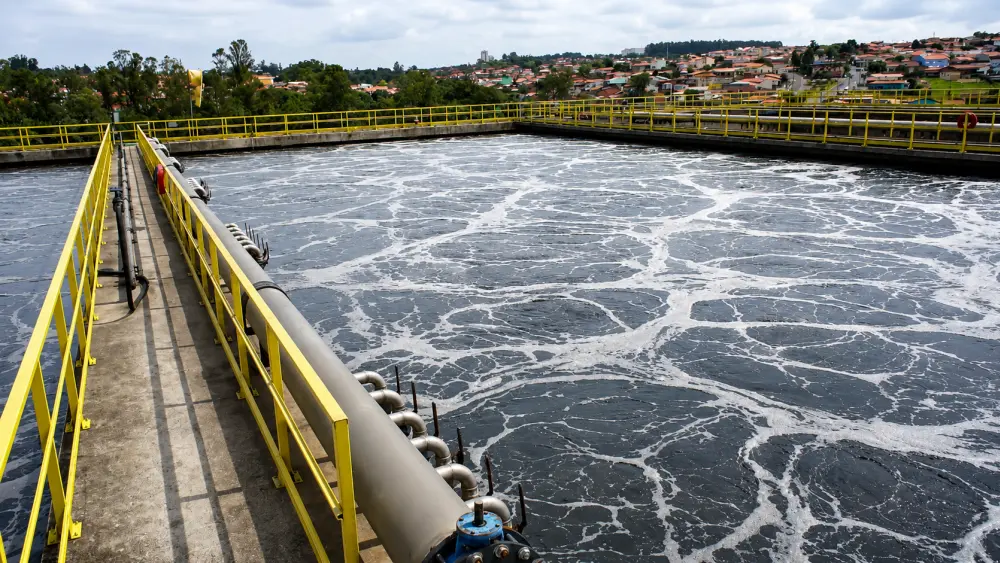
Water treatment: Industrial wastewater (electroplating, metallurgy, papermaking white water), municipal sewage primary sedimentation tanks, river, lake, and sea dredging, and sand removal from tap water;
Mining/Building materials: Dewatering of tailings from mineral processing, slurry thickening, coal slime sedimentation in coal washing plants, and wastewater treatment from sand and gravel plants;
Other industries: Retention and filtration aids in the papermaking industry (in conjunction with cationic additives), concentration of ceramic raw material suspensions, thickening of oilfield drilling mud, and enhanced oil recovery (EOR) agents.
Cationic PAM (CPAM): Primarily used for flocculation and dewatering of organic colloids/sludge. Suitable for systems with high organic matter and high negative charge colloids, and water quality that is mostly acidic/neutral (pH 4-8), it is a core product in municipal environmental protection, papermaking, and dyeing industries. Sludge dewatering is its primary application. Core applications include:
Sludge Dewatering:Filter press dewatering (plate and frame, belt, centrifugal filter presses) for municipal sludge (domestic sewage sludge) and industrial sludge (papermaking sludge, dyeing sludge, food sludge, chemical sludge). Ionization degree is selected according to sludge properties (high ionization for organic sludge, medium to low ionization for mixed sludge);
Water Treatment:Flocculation and sedimentation of high-organic-matter industrial wastewater such as dyeing wastewater, food wastewater, slaughterhouse wastewater, papermaking wastewater, and pharmaceutical wastewater;
Other Industries:Wet-end sizing in the papermaking industry, cationic flocculant, drinking water treatment (low ionization version, compliant with national standards), and textile dyeing auxiliaries.

 HOME
HOME
 PRODUCT
 NEWS
NEWS
 CONTACT US